
PABX vs. Cloud Telephony: Choosing the Right Communication System for Your Business
Business communication plays an important role in maintaining smooth customer interactions, internal coordination, and daily operations. As companies expand, choosing the right business communication system becomes essential for improving connectivity and managing calls efficiently. Two widely used options are PABX systems and Cloud Telephony. While traditional PABX provides a structured and reliable telephone network within an organization, cloud-based communication offers flexibility, remote access, and scalable features. Understanding the differences between PABX vs. Cloud Telephony can help businesses select a communication solution that matches their operational requirements, workforce, and future growth.
PABX vs. Cloud Telephony: Key Differences
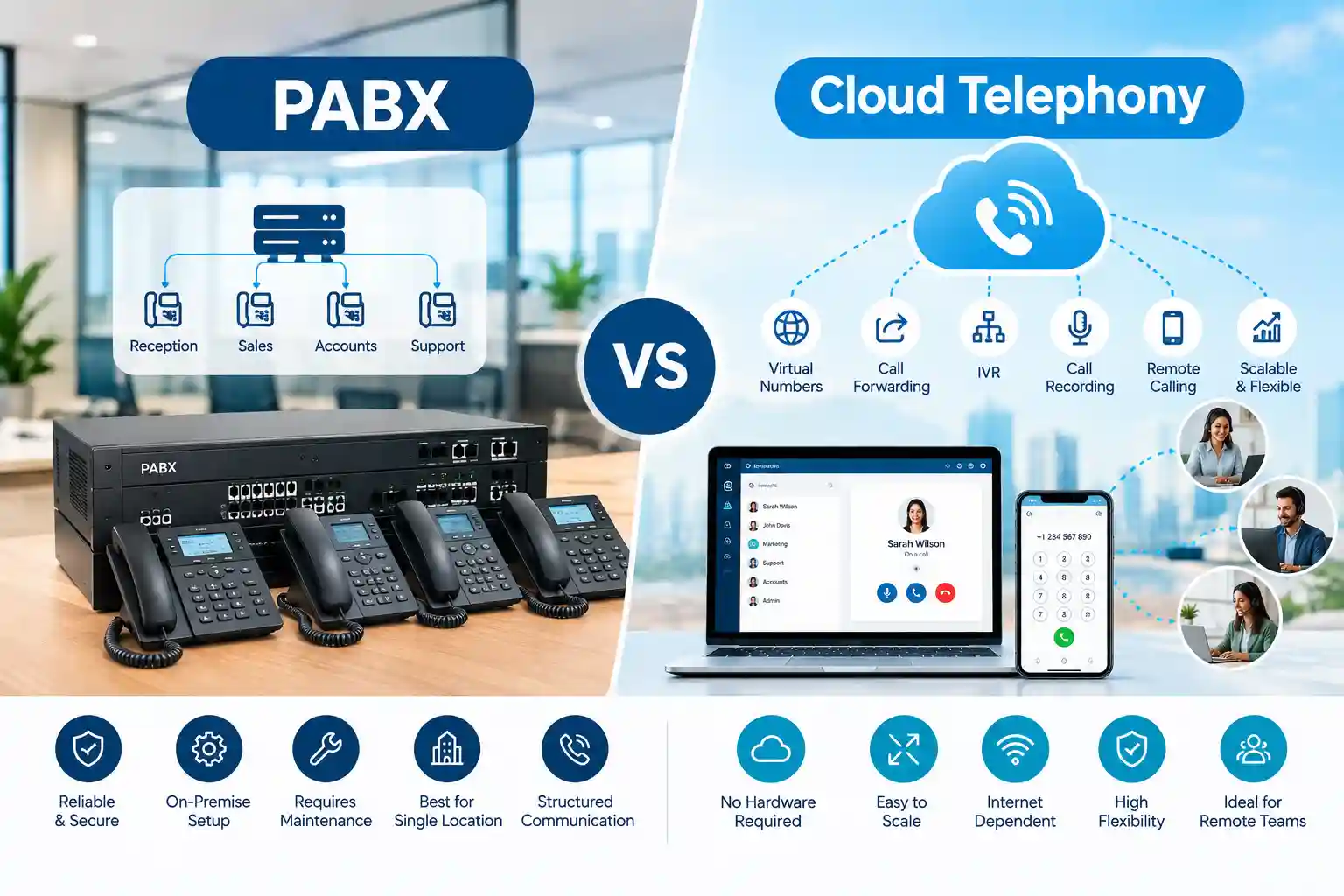
A PABX system, or Private Automatic Branch Exchange, manages internal and external telephone calls through a centralized system. Businesses can connect multiple extensions, transfer calls, manage departments, and handle incoming and outgoing communication efficiently. Modern IP PABX systems can also support VoIP technology, making them suitable for offices that require structured communication and advanced calling features.
Cloud Telephony operates through internet-based infrastructure, allowing businesses to manage calls and communication services without maintaining traditional telephone hardware at the office. Features such as virtual numbers, call forwarding, IVR, call recording, remote calling, and automated call management can support businesses with distributed teams and flexible working environments.
PABX can be suitable for businesses that prefer greater control over their on-site communication infrastructure. Cloud Telephony can provide easier scalability and remote accessibility, particularly for organizations with multiple locations or employees working from different places.
When comparing PABX and Cloud Telephony, businesses should consider installation requirements, maintenance, scalability, internet dependency, security, call management features, and long-term communication needs. A professional business communication solutions provider can assess these requirements and recommend a suitable system.
Conclusion
Both PABX and Cloud Telephony offer valuable communication capabilities for modern businesses. The right choice depends on your office infrastructure, workforce requirements, budget, scalability needs, and preferred communication features. Whether you need an IP PABX system, office telephone system, or Cloud Telephony solution, selecting the right technology can improve business communication, support productivity, and create a more organized calling experience.